






 |
 |
 |
|
 |
||
 |

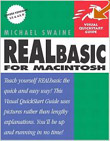
Articles 3D Audio Custom Controls General RB Graphics Hacks Mac OS X Menus Novelty Printing REALbasic 2005 REALbasic 2006 Registration Resources Reviews Serial Speech Sockets XML Video Resource Links News Current News February 2006 January 2006 December 2005 November 2005 October 2005 September 2005 August 2005 July 2005 June 2005 May 2005 April 2005 March 2005  REALbasic for Dummies by Erick Tejkowski 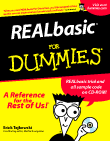 Learning REALbasic through Applications REALbasic for Macintosh REALbasic Cross-Platform Application Development 
Older files are in Stuffit 5 or greater format. Newer files are ".Zip". Download StuffIt Expander |

|
 
Introduction As I mentioned last week, there are many possible ways for you to "protect" your software. I put "protect" in quotation marks, because in reality, your best efforts in software protection will be thwarted. Don't fret, though. With a little creativity, you can stop casual pirates (i.e. keep the honest folks honest) and slow down the pirates. Code Examples Last week we looked as some possible tools you can use to protect your software. Some of these include:
Registration Key Perhaps the most common prevention tool is the registration key. In this scheme you issue some sort of key to clients and customers. The user enters the key when prompted and the software is registered for use. As you might imagine, there are many ways to approach this problem. The main idea is to make a registration key algorithm that produces keys that are difficult to reproduce from thin air. Usually this means a string containing letters and numbers, often combined into groups of 4 or 5 characters at a time. For example, you might construct a registration key like this: dim name,s as string This is a rudimentary example for creating registration keys, but it illustrates an important point or two. First off, there are many ways you can combine characters and digits to form a registration key. Be creative here. Any little twist you can add will throw the casual software pirate. Secondly, the final segment being a checksum is important. Checksums lower the probability that a pirate can randomly produce valid keys. This stems from the fact that information in the checksum is dependent on information elsewhere in the key. This makes it harder for the crackers that are trying to defeat your protection by automatically generating random registration keys in search of a valid one. Some other things to consider about registration keys:
The above code showed you how to create a registration key. To use the key, simply test it in reverse. dim key,name,s as string Conclusion We've looked at some of the issues you are up against when trying to sell software, but when it comes down to it creativity, fortitude, and good code are your best weapons. You can download the code used in this tutorial to help you get started. Have fun and see you next week! |
 |
||
 |
 |
 |
|
 |



 Today we conclude our discussion about releasing software by examining some code for protecting your software. This time we'll look at some code to get you started on a software protection scheme.
  |
 |
 |
||||||||||||||||||||||||||||||
 |
|
 |
||||||||||||||||||||||||||||||
 |
 |
 |
Maintained by the Staff of ResExcellence. This entire site ©1997-2006 ResExcellence
Privacy Statement? Sure we gotta Privacy Statement.
[an error occurred while processing this directive]